Black History: Special Delivery!
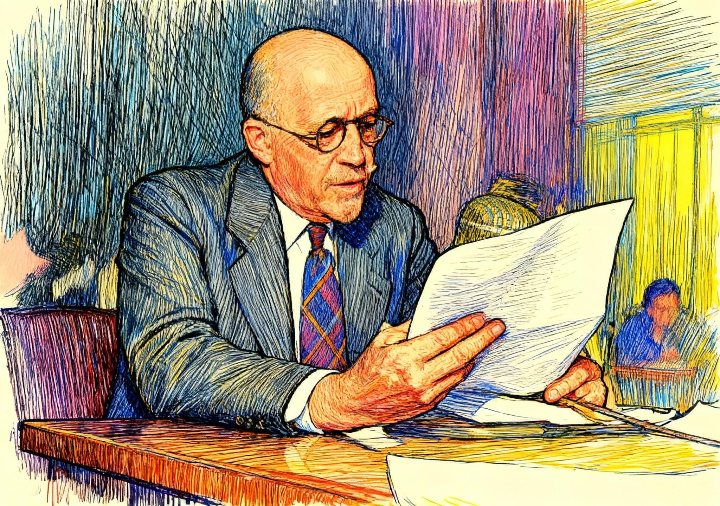
Before W.E.B. DuBois became one of the most influential civil rights thinkers in American history, he was a scholar determined to examine Black life through rigorous investigation rather than assumption.
Born in 1868 in Great Barrington, Massachusetts, DuBois became the first Black American to earn a Ph.D. from Harvard University. He later studied in Germany, where he encountered advanced social science methods that shaped his analytical approach. In 1896, the University of Pennsylvania hired him to conduct a comprehensive study of Philadelphia’s Black population. The result was The Philadelphia Negro, published in 1899 by the University of Pennsylvania.
The study focused on Philadelphia’s Seventh Ward, a predominantly Black neighborhood. DuBois conducted more than 2,500 door-to-door interviews and analyzed data on approximately 9,000 Black residents. He gathered detailed information about employment, housing, education, income, family structure, and crime. He also lived in the community during his research.
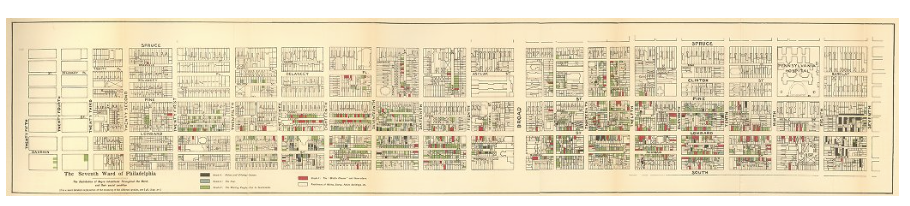
What made the study especially groundbreaking was its mixed-method approach. DuBois combined qualitative fieldwork, including immersive interviews and community observation, with quantitative data such as census records, statistical tables, and neighborhood mapping. This blending of lived experience and statistical analysis was decades ahead of its time. Today, we would call it mixed-method research, but in 1899, it was revolutionary.
The study was not only innovative in its methods but also powerful in its conclusions.
At a time when Black poverty was widely blamed on racial inferiority, DuBois demonstrated that inequality was structural. He documented how discrimination restricted access to skilled jobs. He showed how housing segregation confined Black residents to overcrowded neighborhoods. He traced social challenges to systemic exclusion rather than individual failure.
Instead of blaming individuals, he analyzed systems.
Yet the study was not fully embraced by mainstream academia at the time. Sociology was still emerging as a discipline, and many white scholars were invested in theories that reinforced racial hierarchy. DuBois’ findings challenged those assumptions. His work centered on structural racism decades before institutions were prepared to confront it. As a result, his contributions were often minimized in early sociology departments, even though his methods quietly influenced the field.
Over time, the impact of The Philadelphia Negro became undeniable.
It laid the foundation for modern urban sociology and race studies. It modeled rigorous, community-centered, mixed-method research long before those approaches became standard. Today, it is regularly taught in graduate programs and recognized as a foundational sociological text. Its relevance extends beyond academia.
When policymakers and researchers examine housing segregation, employment discrimination, or concentrated urban poverty, they are examining patterns that Du Bois documented in 1899. His analysis of restricted housing access foreshadowed later practices such as redlining, which formally denied mortgages to Black neighborhoods. Modern studies continue to show that formerly redlined areas face persistent wealth gaps and environmental inequities. The structural framework DuBois introduced remains central to understanding these disparities.
The Philadelphia Negro did more than record data. It reframed the narrative about Black life in America. It demonstrated that research could expose injustice rather than justify it.
Long before national commissions and government reports on inequality, DuBois knocked on doors, compiled evidence, and documented structural barriers with precision.
Dubois’ research was resistance in written form.
Another installment of Melanated Mail has been delivered. Ponder, reflect, and pass it on.