When people think of landmark civil rights cases, Brown v. Board of Education (1954) is often cited as the case that ended racial segregation in public schools. Nearly half a century later, another Supreme Court decision reshaped how the law understands equality and dignity: Olmstead v. L.C. (1999).
This case affirmed that people with disabilities have a legal right to live in the least restrictive, most integrated setting appropriate to their needs. It expanded the reach of the Americans with Disabilities Act of 1990 (ADA) and reframed unnecessary institutionalization as a civil rights violation rather than solely a matter of medical discretion.
The Women at the Center of the Case
Olmstead v. L.C. was brought by Lois Curtis (February 7, 1967 – November 3, 2022), an African American woman diagnosed with cognitive disabilities and schizophrenia, and Elaine Wilson (born 1959 – died 2003), her co-plaintiff, who also had cognitive and mental health disabilities.
Curtis, identified in court documents as “L.C.,” and Wilson had both been confined for years in Georgia state psychiatric hospitals despite professional determinations that they could live in the community with appropriate supports. Their continued institutionalization was not due to medical necessity, but the state’s failure to provide adequate community-based services.
A Childhood Marked by Institutions
Curtis’s experience with institutional care began early. As a child growing up in Georgia, she loved school but struggled with behavioral challenges related to her disabilities. Her family lacked sufficient support to care for her safely at home. When Curtis wandered away, her mother—fearful for her safety—called 911. Police responses often resulted in Curtis being taken either to jail or to a psychiatric hospital.
Beginning at age eleven, Curtis cycled in and out of the Georgia Regional Hospital’s child and adolescent unit and eventually lived almost entirely in institutional settings. By her late teens, she was deeply unhappy and consistently expressed her desire to live in the community.
During this time, Curtis was treated with psychiatric medications that left her heavily sedated. Like many individuals with developmental disabilities and behavioral challenges, she was cared for in settings designed primarily for mental health treatment rather than developmental support, limiting her quality of life and opportunities for independence.
Seeking Help and Facing Systemic Stagnation
Curtis repeatedly contacted the Atlanta Legal Aid Society, seeking assistance in leaving the institution. Attempts to place her in personal care homes failed due to inadequate staffing and a lack of support. Advocates pushed state officials to provide community-based services, but the state declined.
Doctors eventually acknowledged that Curtis no longer met the criteria for involuntary confinement. Still, the state offered no viable alternatives, asserting that continued institutionalization met its legal obligations. With nowhere else to go, Curtis returned to Georgia Regional Hospital. Wilson faced similar barriers, and together they became plaintiffs in a lawsuit filed in 1995 against the Georgia Department of Human Resources, then led by Commissioner Tommy Olmstead.
The Supreme Court Decision
Curtis and Wilson argued that forcing people with disabilities to remain in institutions when they could live in the community constituted discrimination under the ADA. They won in federal district court in 1997. The state appealed, citing insufficient funds. After the Eleventh Circuit affirmed the ruling, Georgia appealed again, and the case reached the U.S. Supreme Court.
On June 22, 1999, the Court ruled 6–3 in favor of Curtis and Wilson. Writing for the majority, Justice Ruth Bader Ginsburg held that unjustified institutionalization violates the ADA because it reinforces harmful assumptions that people with disabilities are incapable of participating in community life. The Court required states to provide services in the most integrated setting appropriate and rejected funding limitations as a blanket justification for segregation. This principle became known as the Olmstead mandate.
Life After Olmstead
Following the decision, Curtis was finally able to live in the community. Over time, she lived in group homes, host homes, and, eventually, in her own apartment with support services. She became a visual artist, known for bold, emotionally expressive portraits, and a public speaker, sharing her experiences nationwide.
A defining moment came on June 20, 2011, when Curtis presented a self-portrait to President Barack Obama in the Oval Office. She later explored singing and songwriting and enjoyed traveling, spending time with friends, and attending church.
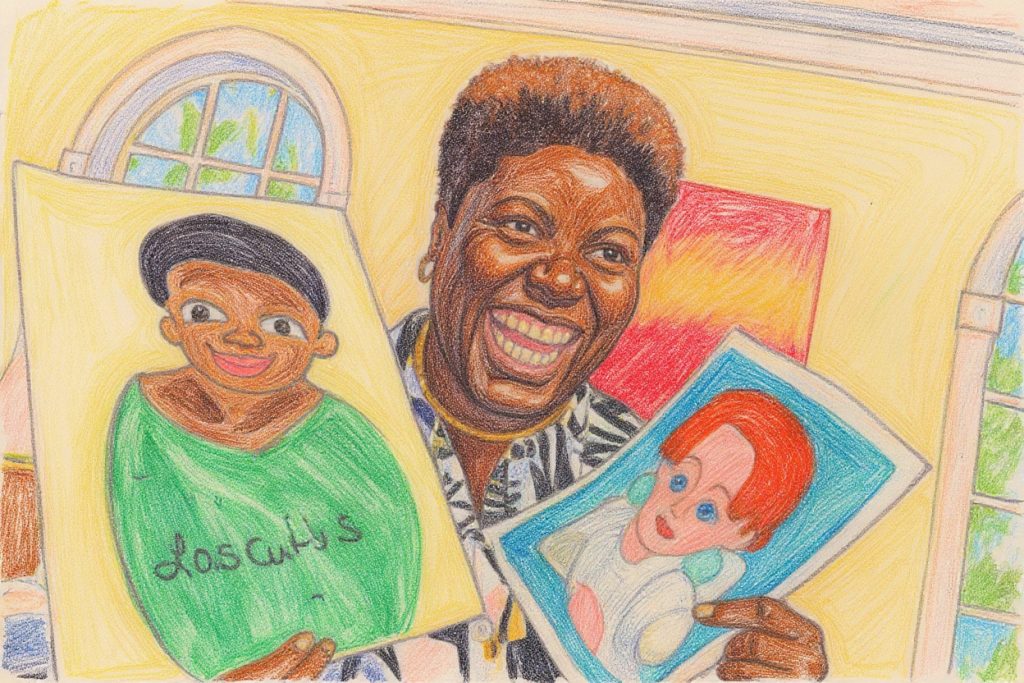
Curtis died from pancreatic cancer on November 3, 2022, at the age of 55. Elaine Wilson, whose advocacy was essential to the case, died in 2003.
An Enduring Legacy
Olmstead v. L.C. transformed disability policy across the United States, prompting states to expand community-based services and clarifying that institutions should not be the default response to disability. Organizations such as the Association of People Supporting Employment First (APSE) honor Curtis’s impact through the Lois Curtis Award, recognizing leadership in advancing inclusion and employment for people with disabilities.
More than two decades later, Olmstead remains a reminder that civil rights include the freedom to live, belong, and participate fully in community life.
Another installment of Melanated Mail has been delivered. Ponder, reflect, and pass it on.