Black History: Special Delivery!

The local fight for voting rights that led to national change
When the story of Selma’s Voting Rights Movement is told, it often begins with national leaders, televised marches, and moments that shocked the country. However, long before receiving national attention, a small group of brave local visionaries had already been doing the dangerous and necessary work of organizing for change. They are remembered as the Courageous Eight.
The Courageous Eight were leaders within the Dallas County Voters League (DCVL), a local organization that had been fighting voter suppression in Selma, Alabama, for years. At a time when fewer than two percent of eligible Black residents in Dallas County were registered to vote, these individuals worked persistently in one of the most hostile political environments in the South. Their efforts predated the famous Selma marches and laid the foundation for what would become a national movement.
The group included Amelia Boynton Robinson, Marie Foster, F.D. Reese, Henry Shannon, Sullivan Jackson, J.L. Chestnut, Albert Turner, and Ulysses S. Blackmon. They were teachers, ministers, activists, and community leaders, deeply rooted in Selma and fully aware of the risks involved. Attempting to register to vote could result in job loss, eviction, intimidation, or violence. Despite this, they continued.
Although the Fifteenth Amendment guaranteed that the right to vote could not be denied on the basis of race, Jim Crow–era laws used so-called “literacy tests” to systematically prevent Black Americans from registering to vote. These tests often included impossible or irrelevant questions and were graded arbitrarily by white registrars who had full discretion over the outcome, creating hurdles that were virtually insurmountable in many counties. It was against this backdrop of systemic obstruction that the Courageous Eight organized.
Their work focused on education, documentation, and strategic organizing. Members of the Courageous Eight helped community members prepare for voter registration attempts, carefully recorded instances of intimidation and discriminatory practices, and organized mass meetings in churches and homes. These gatherings became critical spaces where people could learn their rights, share experiences, and build collective resolve.
Marie Foster, for example, became known for helping others navigate the deliberately confusing voter registration process, often guiding community members through requirements designed to discourage participation. Rev. F.D. Reese, an educator and pastor, encouraged Black teachers to publicly march for voting rights, an act that carried immense professional and personal risk but helped break the culture of fear surrounding political engagement. Others faced economic retaliation, threats, and constant surveillance, yet remained committed to the work.
At the time, some locals referred to the group informally as the “Crazy Eight,” a nickname reflecting how extraordinary, and to opponents, unbelievable, their persistence appeared in a system designed to silence them. Today, they are rightly remembered as the Courageous Eight, a name that honors both their courage and their leadership.
The Courageous Eight believed in peaceful protest and long-term strategy. When years of local organizing failed to draw a meaningful state or federal response, they made a pivotal decision. They invited outside support. Their outreach brought the Student Nonviolent Coordinating Committee (SNCC) to Selma, followed later by the Southern Christian Leadership Conference (SCLC) and Dr. Martin Luther King Jr.
This decision transformed Selma from a local struggle into a national reckoning. The organizing groundwork laid by the Courageous Eight directly contributed to Freedom Day, the Selma to Montgomery marches, and ultimately the passage of the Voting Rights Act of 1965.
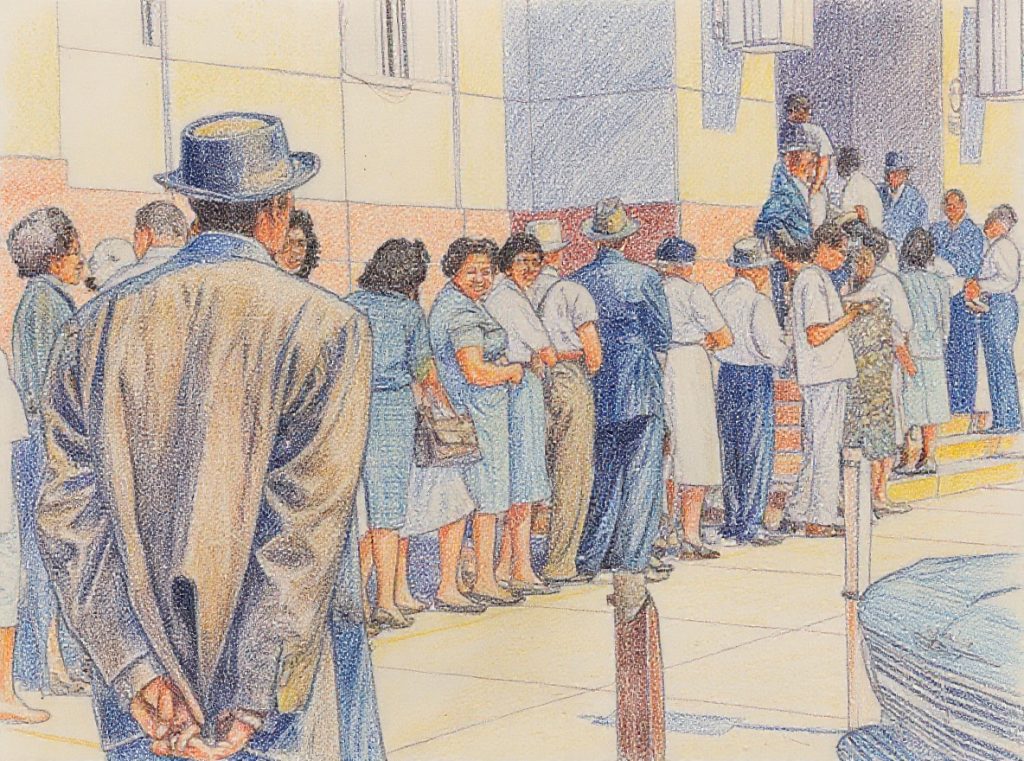
Freedom Day in Selma was a pivotal voting rights protest on October 7, 1963, where hundreds of Black residents lined up at the Dallas County Courthouse to register to vote, despite intense intimidation from Sheriff Jim Clark. Organized by the Student Nonviolent Coordinating Committee (SNCC), the event highlighted violations of the 1957 Civil Rights Act and helped spark the movement that led to the 1965 Voting Rights Act.
The Courageous Eight remind us that movements do not begin with headlines. They begin with small groups of committed individuals, often working without a spotlight or recognition. Their legacy is a masterclass on leadership and courage mobilized for positive change.
Another installment of melanated mail has been delivered. Ponder, reflect, and pass it on!